


Are You Looking for a Tutor?
Find Out About the Service We Provide

Never Stop Learning-Summer Fun
AVOID SUMMER LEARNING LOSS
For most children, summer is a time to leave classes and homework behind. While summer is a holiday from school, it does not have to be a holiday from learning. The summer holiday is great for recharging your children’s batteries, because if they are not using the skills and knowledge that was learned in the classroom, they will find themselves lagging behind when school starts up again.

Now it is also true that children do need a break to rest and do other things. In fact most learning does rebound after the holiday to overtake the previous level.
For children who have struggled in school, summer is an invaluable opportunity to catch-up on key skills and feel more confident when they return to class. For students who do well, it is an opportunity to keep their enthusiasm for learning high.
Click here to find out about our Summer Lessons…
FUN SUMMER LEARNING TIPS
We never stop learning so here are some ideas to help encourage our children’s learning and have some fun this summer.
Learn about time: allow children to be the family timekeeper and get them to wear a watch every day.
Learn about money: do a car boot sale with your children or they could start their own business (e.g. making and selling lemonade).
Learn about measurement: read recipes, use scales and cook delicious food together.
Learn about the past: by letting them interview grandparents or an elderly neighbour. This can really bring ‘history’ to life.
Improve your writing: by encouraging them to keep a diary every day. Children can maintain their writing skills and capture many memories for the future.
Practice your reading: Take part in the Library Service reading challenge which rewards children for reading a minimum number of books.
Also, as the new school year approaches it may be useful to discuss routines and agree how to organise time, work and anything else which need to be done.
Finally, if they still complain about being bored, try saying “well I guess I haven’t given you enough chores yet!” and see what happens.
Summer Learning Loss can be significant:
School Transition – How to prepare your child
School Transition – How to prepare your child
These are the top 5 concerns for parents and children based on UCL research:
Top 5 Concerns for Parents
-Bullying
-Safety
-The amount of homework
-Adjusting to having lots of teachers
-Making new friends
Top 5 Concerns for Children
-Getting Lost
-Losing old friends
-Homework
-Discipline and -detentions
-Being bullied

Pupil and Parent Concerns
Many of our little superheroes will soon be pushing through to the next level at school. This may be a transition between Infant to Junior or Junior to Senior. Even changing year groups can be hard for younger children.
Do you remember the feeling of excitement and fear of going up to a new class or school? I certainly remember it being scary and stressful!
Now is a good time to talk to your children about these changes. Fear of the unknown is the worst thing, especially for imaginative, young minds.
Helping with Transition
It is a good idea to ask your child to write a list of questions themselves. Although you never know what their concerns might be, they may include some of the things listed above.
Take any opportunity to talk to the new teacher or school about your child’s needs, personality, strengths and weaknesses. Understanding a child usually helps teachers teach that child more effectively. It is a good idea to get the children on the teacher’s radar if you have any major concerns such as special needs.
Practical preparations are important to help the child get mentally ready. A new uniform or bag might seem a small thing, but it can help your child imagine themselves in their new role. The trip to purchase these items may be a good opportunity to talk through their hopes and fears.
Good News
The good news is that most of these fears reduce very quickly, and mostly go away, by the end of year 7. In fact only 3% of children are worried after a term at Secondary School (according to a University of London study). Most students are ready to develop new friends and their interest in their schoolwork increases.
What can we do to Help?
At I Love to Learn, we understand the concerns that children and parents experience when moving from one educational setting to another. It is not just the emotional journey but also it is an academic journey. We can provide children with the skills and knowledge they need to make this transition smooth and stress free. We can focus on developing personal organisation, time keeping alongside filling any gaps they might have in their maths and/or English.
We will be happy to help at our Fareham, Havant or Portsmouth centres. To find out more, call us or book a free assessment!
For further resources see: www.ucl.ac.uk/stars Stars Booklet for Pupils on Transition
www.ioe.ac.uk/projects/eppe
Is Maths Anxiety a Thing?

Did you hate maths at school? Do you feel you “can’t do maths?” You may not be alone.
Recently researchers claimed that “Maths Anxiety” is real. One in 10 children suffer from despair and rage when faced with the subject, according to new research from Cambridge University’s Faculty of Education and its Centre for Neuroscience. Click here to read more…..
Could this be just another made up term to excuse poor attainment or could working with numbers really be a cause of exceptional unhappiness for children?
As a tutor, I have certainly come across lots of students who ‘hate’ maths. Some of them seem to have genuine problems with remembering and manipulating numbers. Many of them, however, do seem to make remarkable progress when they realise they can do maths after all.

Why Maths?
Stress or anxiety about any subject is obviously an impediment to learning. Is maths so different? I suspect people learn to like or dislike maths for the same reasons. When you are leaning maths the answers you give are either right or they are wrong, unlike other subjects perhaps, so if you are getting it wrong the feedback is rather immediate. If students fear failure or ‘getting it wrong’ it could make early negative experiences particularly unpleasant and overwhelming. So, for example, finding fractions difficult in primary school may lead to enough wrong answers and unhappiness to convince some children that maths is something they ‘can’t do.’
I always say that maths is like a house, you have to build the foundation first, before you build the walls. If students have switched off at some point in their school careers, then they have not built a firm foundation. All the maths they are taught after that will become much harder because they have not learned the basic skills, such as times tables or place value. This can lead to students getting very stuck unless they find a way to fill in the gaps.
This is a serious problem as STEM (science technology engineering and maths) careers rely on high levels of maths fluency and attract higher than average salaries.
Stress Reduction

Learning anything while being anxious is not helpful. Increased levels of anxiety use up working memory and stop learning from taking place. Most people find it much harder to remember appointments if they have an exceptionally stressed day at home or the office.
As a tutor, I always give students work that they can do (i.e. easy enough for them but not too easy) so that they get most of their answers right. When they begin to feel relaxed, I can then start introducing new topics strengthening their weaker areas.
In addition, learning times table by rote, may seem old fashioned, but it makes maths so much easier. Try reading a new language when you don’t know all the alphabet and have to look them up each time. Much slower and much less fluent. We try to do activities, such as lots of number bonds and tables, that don’t require much working memory and are highly repetitive.
The third approach is to change the mindset of anxious learners. Maths is actually a subject that requires a lot of practice and repetition, but if people put in the hours almost everyone can improve. A bit like jogging, everyone can do it, rather than fine art when you need a high level innate skill. So rather than having a ‘fixed mindset’, i.e. some people can do maths and some people just can’t; students need to adopt a ‘growth mindset’ i.e. “I can do it if I try.”
Finally, parents can make maths more fun by putting away the study books and getting out some games. Card games and dice games (yes the dreaded Monopoly) can make numbers relevant and fun. At a younger age, using blocks such as lego can help with number, fractions, counting and shapes. The abacus is an ancient tool which is still helpful today.
Learning to Love Maths
Anxiety about maths is certainly a problem for many people, but it can be overcome. The more people worry about it, the bigger it can grow. Sometimes a few deep breathes and a chance to express themselves, then reframe these fears, can make a big difference.
Many people have found that when they have come back to maths learning later in life they have actually enjoyed it! Making maths fun can be a good way for both fearful parents and children to help each other overcome anxiety.
11+ Exam Success
All our 11+ students have passed exams and been offered places to at least one of their chosen schools again this year. This is such fantastic news and well deserved. Congratulations to all those tutors and students who worked so hard.
Over the years we have developed our experience with common entrance and 11+ exam students. We like to get the entrance exam past papers from the schools in question. After that we assess each child to help us see which areas need strengthening. We then design a programme to help our students meet the requirements of each test. This gives many students a boost in the their confidence and skills that helps them throughout their school experience.
We have lots of specialist resources such as Verbal Reasoning and Non-Verbal Reasoning programmes. We are also very aware of the high standard of maths and written English. Many students need to learn to write more fluently and in an expressive and interesting style.
It is always a pleasure to help children push themselves and really do their best!
Special Mentions go to;
- Bailey- foundation scholarship to PGS and King Edwards

- Miabella-scholarship to PHSG & PGS
- Minaal-passed PHSG
- Shahid-passed PGS
- Maksim-passed PGS
- Poppy-passed PHSG
- Joe-passed PGS
- Olya-passed PHSG (swimming scholarship)
- Siha-passed PHSG
We wish you all a great transition to your new schools and every success while there!
New Tutor-Debs Smart
Debs is a Chemical Engineer by trade and worked for several years at Exxon at the Fawley Oil Refinery! Nowadays she is a qualified and experienced GCSE Maths tutor and is kindly giving us her expertise. She and her husband Neil are huge Pompey fans, so look out for them at Fratton Park!

She says “I’ve only been at I Love to Learn for a few months, but have enjoyed seeing how the students grow in confidence as they practice the different skills. I love to see their improvement & it is really encouraging when they come back with stories of improvement at school.”
Suggested Reading for 11+ Students
Why 11+ Students Should Read
Reading on a regular basis is an excellent way to help your child develop their English skills and vocabulary in preparation for entrance exams/11+ exams. It will certainly help them in English and verbal reasoning tests.
Reading helps children to identify and understand the use of similes, metaphors, adjectives, adverbs etc. within sentences; it also helps them to see how sentences can be constructed in different ways and apply the rules of English grammar and spelling.

If children are reluctant to try a new book perhaps read the first chapter to them and then see if they are curious to read the rest. Listening to audio books on long journeys is another way to expose children to more challenging books and language. Try and make reading part of normal life by including it in your child’s daily routine. Keeping electrical devices out of bedrooms and an early bedtime with only books for company provides time and space to enjoy books.
Finally, like it or not, we are role models and so the challenge to us as parents is to be seen to read too! Perhaps have family reading times, where everyone is reading, holidays or screen free mornings or evenings. Sharing a love of books is a positive way to encourage children to read.
The following suggestions are a mix of classics and more contemporary books and are in no particular order. Of course, you can’t read them all. The list is long so that you and your child can find suggestions most suited to them. Don’t think you have to read them all!
Click here to find out the 11+ Common Entrance Assessment Dates this year…


Sir Arthur Conan Doyle – The Lost World, Sherlock Holmes, The Hound of the Baske
rvilles
Arthur Ransome – Swallows and Amazons and other books in this series
C.S Lewis – All of the Narnia Series starting with The Lion, The Witch and the Wardrobe
Laura Ingalls Wilder – Little House on the Prairie, Little House in the Big Woods
Frances Hodgson Burnett – The Secret Garden, A Little Princess
William Golding – Lord of the Flies
J.R.R Tolkein – The Lord of the Ring (3 books: The Fellowship of the Ring, The Two Towers, The Return of the King) The Hobbit
Mark Twain – The Adventures of Huckleberry Finn, The Adventures of Tom Sawyer
George Orwell – Animal Farm
Malorie Blackman – Noughts and Crosses Trilogy, Tell Me No Lies, Thief, Pig Heart Boy
Susan Coolidge – What Katy Did series
Anne Holm – I Am David
Daniel Defoe – Robinson Crusoe
E. Nesbit – The Railway Children, The Phoenix and the Carpet, Five Children and It, The Wouldbegoods, The Treasure Seekers
Michael Morpurgo books – e.g. The Butterfly Lion, War Horse, From Hereabout Hill, Why the Whales Came (there are plenty more good books he has also written)
Joan Aiken – The Wolves of Willoughby Chase
Nina Bawden – Carrie’s War
Carolyn Keene – Nancy Drew mysteries
Charles Kingsley – The Water Babies
Clive King – Stig of the Dump
Lucy Montgomery – Anne of Green Gables and other books in this series
Gerald Durrell – My family and Other Animals, Birds, Beasts and Relatives, A Zoo in my Luggage, Encounters with Animals
Robert Louis Stevenson – Treasure Island, Kidnapped
Paul Gallico – The Snow Goose, Scruffy
Kenneth Graham – The Wind in the Willows
Rudyard Kipling – Jungle Book, Just So Stories
Eleanor H. Porter – Pollyanna
R.M. Ballantyne – Coral Island
Anna Sewell – Black Beauty
Elizabeth Goudge – The Little White Horse
Johanna Spyri – Heidi
Noel Steatfeild – Ballet Shoes, White Boots
Ian Serraillier – The Silver Sword
Mary Norton – The Borrowers and other books in this series
Louisa May Alcott – Little Women
Lewis Carroll – Alice in Wonderland
Hugh Lofting – Dr Dolittle
Eva Ibbotson – The Star of Kazan
Eoin Colfer – Artemis Fowl series of books
Richard Adams – Watership Down
Richmal Crompton – Just William books
E.B. White – Charlotte’s Web
Jules Verne – Journey to the Centre of the Earth, Around the World in 80 days
Ted Hughes – How the Whale Became, The Iron Man
T.H. White – The Sword in the Stone
Philipa Pearce – Tom’s Midnight Garden
Dick-King Smith books – e.g. The Crowstarver, The Sheep Pig
Anthony Horowitz – Granny,
Alex Rider series, Stormbreaker
Anne Fine books – e.g. The Flour Babies, Madame Doubtfire
James Herriot – All Creatures Great and Small
Charlotte Bronte – Jane Eyre
H.G. Wells – The Time Machine
Charles Dickens – A Christmas Carol
D Adams – The Hitchhiker’s Guide to the Galaxy
John Boyne – Boy in the Striped Pyjamas
Snicket, Lemony – A Series of Unfortunate Events series of books
Maths or English Tutors Wanted
Tutor Role and Responsibilities
Excellent Tutors Wanted
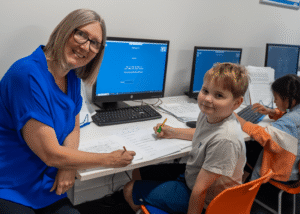
 We are looking for excellent and enthusiastic tutors to teach part time after school and/or Saturday mornings. Join our team and make full use of your time after-school or on Saturday mornings. We find the students, sort out payment and give you a great place to work with minimum hassle. All you have to do concentrate on the teaching!
You would be tutoring children 6-16 in maths and English in either one of our dedicated, OFSTED registered, education centres. They are located in Havant, Portsmouth and Fareham.
- We provide full training
- You do not need to be a maths or English specialist
- All resources provided in the centre
- Take nothing home
- Flexible sessions to suit you
Remuneration:
Pay is based on the number of students taught in a session or sessions. The more students you teach, the more you will get paid. This can be up to £37.50 per hour.
Qualifications and Education Requirements
Qualified Teacher Status
DBS Cleared
Preferred Skills
Classroom Experience
Job Advert Form
Form for Potential Employees to Respond with
Portsmouth Director-Adam Ashworth
Calm and Professional, Qualified Teacher
Adam is widely recognized as an incredibly friendly and devoted secondary school teacher. Throughout his 12-year tenure at Portsmouth and Stubbington schools, he consistently went beyond the call of duty to assist his students, especially when it comes to their GCSEs. What truly sets Adam apart is his unwavering commitment to his students’ academic success. He demonstrates exceptional dedication and passion for his role as an tutor.
In addition to being an outstanding teacher, Adam harbours a genuine love for sports. While his involvement in hockey may have decreased over time, it remains one of his favorite pursuits. Furthermore, Adam thoroughly enjoys participating in games of tennis and cricket, which exemplify his active and adventurous nature.
Interestingly, Adam says that one of the main reasons he finds immense satisfaction in his role as a teacher is the calm and focused atmosphere at I Love to Learn Professional Tuition. Adam relishes the opportunity to personally connect with his students, as he firmly believes that building strong relationships is paramount in facilitating their growth.
After several years of working here with us, Adam has become an absolute favourite among our staff. His exceptional skills and dedication have garnered numerous feedback and glowing testimonials from delighted parents. Leading a remarkable team of tutors at the Portsmouth Centre, Adam has a welcoming and approachable demeanor that parents absolutely love. His professionalism shines through, leaving no doubt in our minds about his capabilities as a Centre Manager. Parents find him to be professional, honest, and pleasant to interact with. He has proven himself time and time again and continues to be an asset to our team.
To summarize, Adam’s friendly demeanor, unwavering dedication, and sporting enthusiasm make him an exceptional tutor. His extensive experience, combined with his genuine passion for helping students succeed, makes him an invaluable asset to the our community.

Christmas Competition Winners Portsmouth


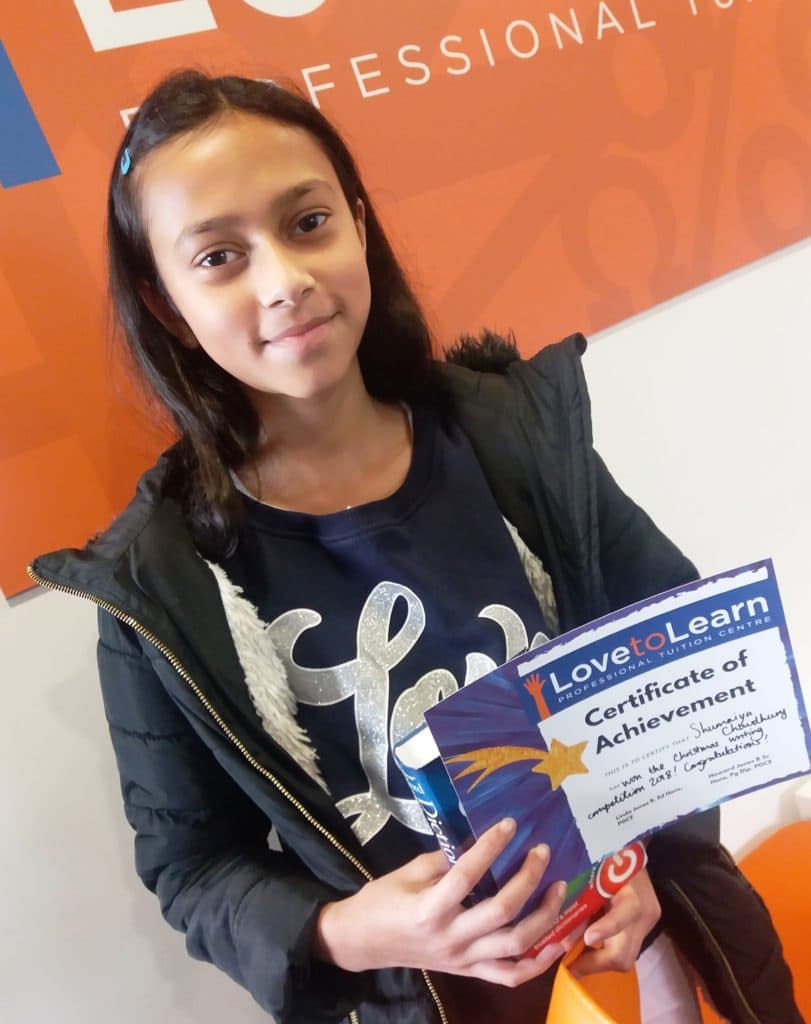
Here are the winners of the Christmas Competitions in our Portsmouth Tuition Centre. All the tutors are proud to support their progress in maths and Writing. All the writing was of a very high standard and Linda said some of the poetry was beautiful!
The competition was to write prose or poetry about Reindeer or do our ‘Super Challenge’ (which tests mental maths speed).
We had some wonderful entries and really enjoyed reading them. Thanks!